Skip to content
Granvia, Good Food. For All.
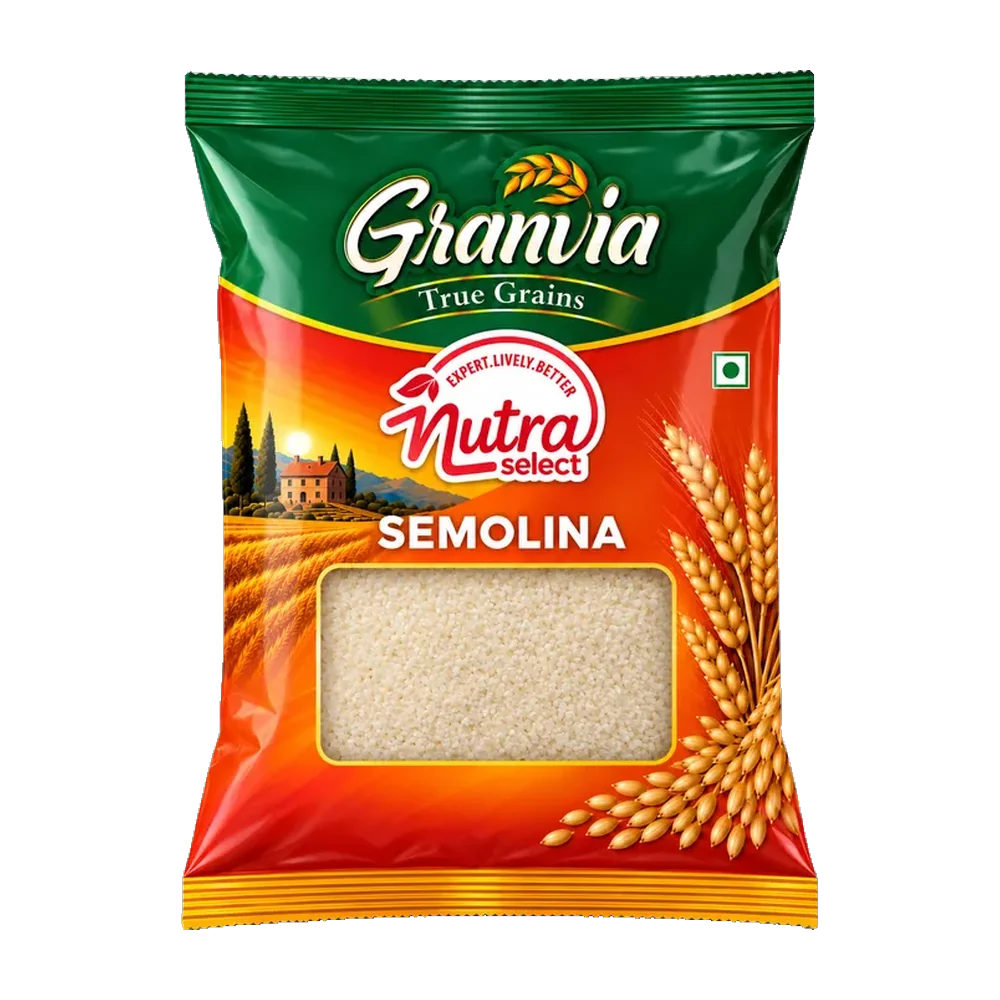
Granvia Semolina (Suji) pack
True GrainsNutra Select

Semolina (Suji)

Made from wheat, suji naturally contains protein and gives everyday dishes a satisfying texture, carefully milled and hygienically packed.

Pack sizes

  • 150g
  • 200g
  • 500g

From the pack to the plate

The Sweet with Many Names

Few ingredients demonstrate India’s talent for reinvention as beautifully as suji.

Roast it with ghee, add sweetened water or milk and something remarkable happens. The dry, pale grains swell into a soft, fragrant sweet that appears across the country under many different names.

In northern India, it is Suji ka Halwa, served as a homely dessert, as part of a Halwa-Poori breakfast and as prasad during religious ceremonies. In Maharashtra, it becomes sheera. Travel south and it acquires the colour and fragrance of saffron as Rava Kesari or Kesari Bath. In Karnataka, sweet Kesari Bath may even be served beside savoury Khara Bath—a breakfast combination affectionately known as “Chow Chow Bath”.

In Bengal, the same preparation becomes Mohanbhog.

The name is often understood as a joining of Mohan—a name for Krishna—and bhog, food offered to a deity. Made generously with ghee, milk, cardamom, raisins and cashews, Mohanbhog is associated with pujas, festivals and special family occasions. Once offered, it returns to the gathering as prasad: food transformed through devotion and sharing.

The wider history of halwa is equally well travelled. The word is connected to the Arabic term for something sweet, and versions of halwa moved through Persia, Central Asia and the Indian subcontinent over many centuries. Indian cooks took the broad idea and expanded it beyond recognition, creating halwas from atta, moong dal, carrots, gourds, almonds and many other ingredients.

Suji halwa may be one of the simplest members of this family, but simplicity makes technique especially important. The suji must be roasted patiently until every grain is coated in ghee and gives off a warm, nutty aroma. Only then is the hot sweetened liquid added.

In a matter of minutes, an everyday grain becomes a festive sweet.

In the North, it may accompany Poori; in the South, it may be served for breakfast; and in Bengal, it may be offered during a puja. Its name changes as it travels, but the pleasure of that first warm, ghee-scented spoonful remains much the same.

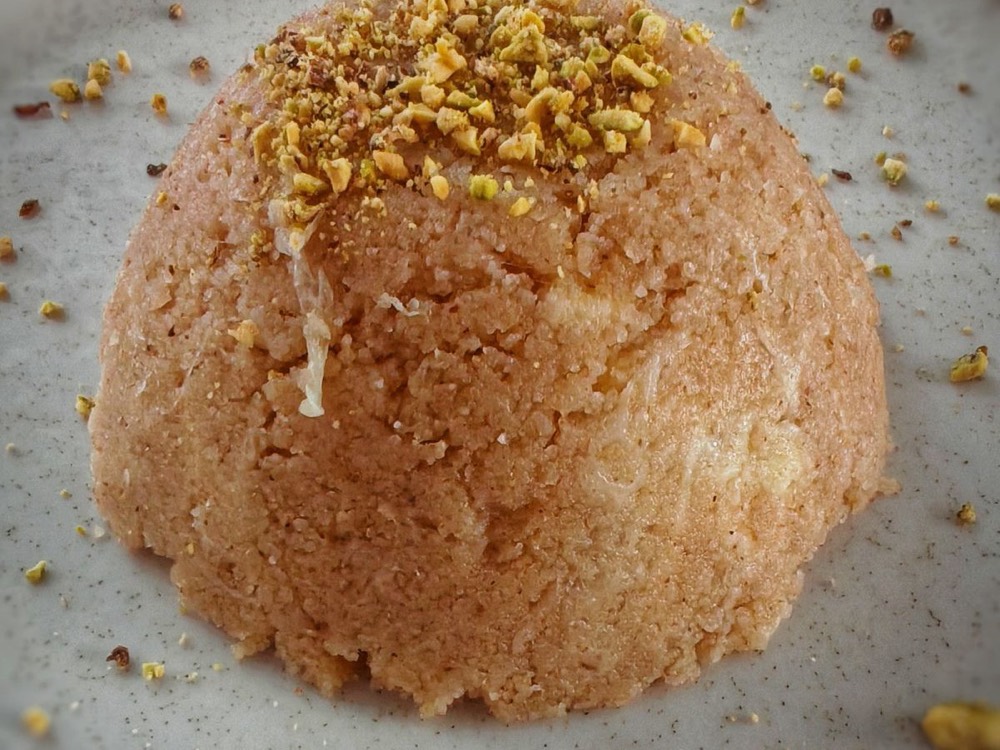
Bengali Style Mohanbhog

A rich, milk-cooked suji halwa fragrant with cardamom and finished with golden cashews and plump raisins. Make it as a festive offering, a family dessert or simply to turn an ordinary day into an occasion.

  • Serves: 4–6
  • Preparation time: 5 minutes
  • Cooking time: 20 minutes
Bengali Style Mohanbhog, serving suggestion
Serving suggestion

You will need

  • 1 cup Granvia Suji
  • ⅓ cup ghee
  • 1 cup full-fat milk
  • 1 cup water
  • ½ cup sugar, or according to taste
  • 1 bay leaf
  • 4 green cardamom pods, lightly crushed
  • A small pinch of saffron, optional
  • 2 tbsp cashew nuts
  • 2 tbsp raisins
  • 1 tbsp sliced almonds or pistachios, optional

From pack to plate

  1. Prepare the sweetened milk

    Combine the milk, water, sugar, cardamom and optional saffron in a saucepan. Heat gently until the sugar dissolves. Keep the mixture hot without allowing it to reduce significantly.

  2. Fry the fruit and nuts

    Heat one tablespoon of ghee in a heavy-bottomed kadai. Fry the cashews until golden, then add the raisins. When the raisins begin to swell, remove everything and keep aside.

  3. Roast the suji

    Add the remaining ghee and bay leaf to the kadai. Add the Granvia Suji and roast over low to medium-low heat, stirring continuously.

  4. Wait for the aroma

    Continue roasting until the suji becomes lightly golden, each grain is coated with ghee and a warm, nutty aroma rises from the pan. Do not hurry this stage.

  5. Add the liquid carefully

    Reduce the heat and gradually pour in the hot milk mixture, stirring continuously. Take care, as the mixture will bubble and splutter.

  6. Cook until soft

    Keep stirring until the Granvia Suji absorbs the liquid and begins to leave the sides of the kadai. Cover and cook over very low heat for another 2–3 minutes.

  7. Finish the Mohanbhog

    Remove the bay leaf. Fold in the fried cashews, raisins and optional almonds or pistachios, reserving a few for the top.

  8. Rest and serve

    Cover the kadai and allow the Mohanbhog to rest for five minutes. Serve warm, on its own or with freshly made Luchi.

The Mohanbhog Secret

Roasting determines both flavour and texture. Keep the heat gentle and stir patiently until the suji smells nutty but has not turned dark. Adding the milk mixture while it is hot helps the grains swell evenly and reduces the chance of lumps.
Find Granvia near you, or partner with us.