Skip to content
Granvia, Good Food. For All.
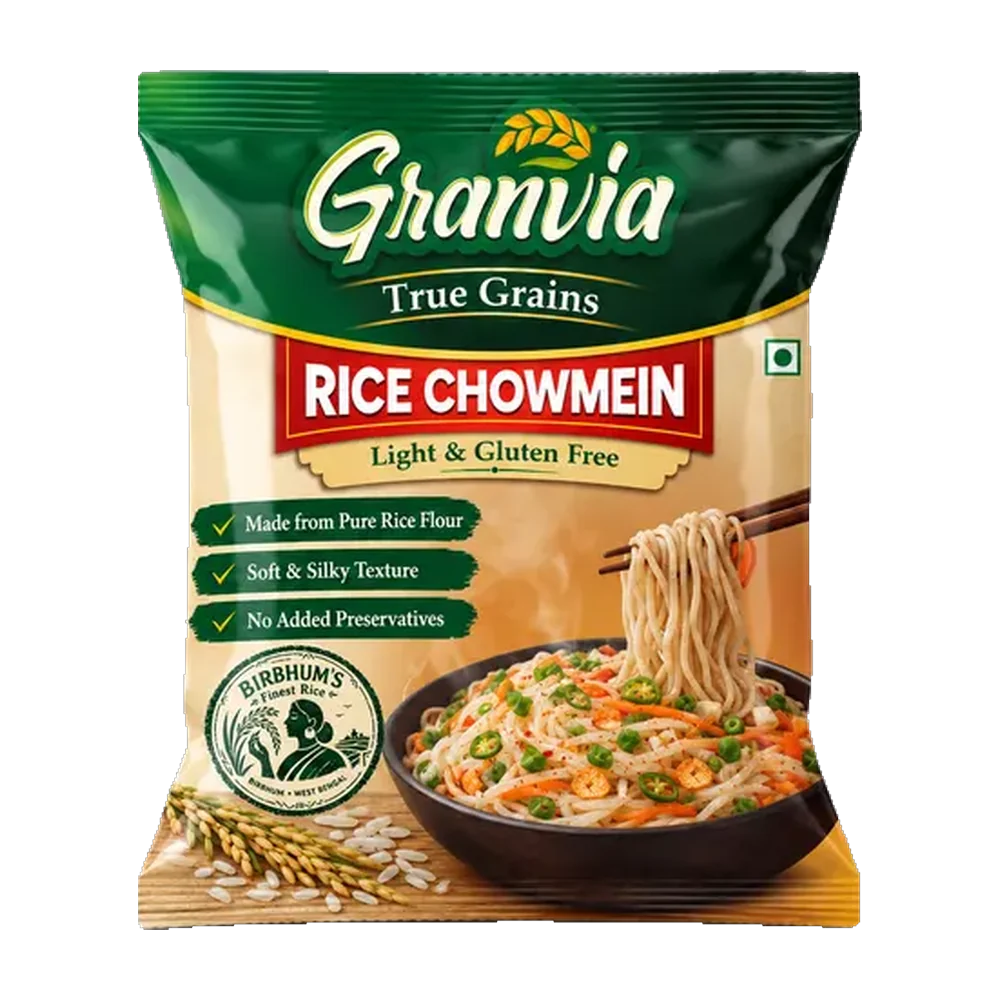
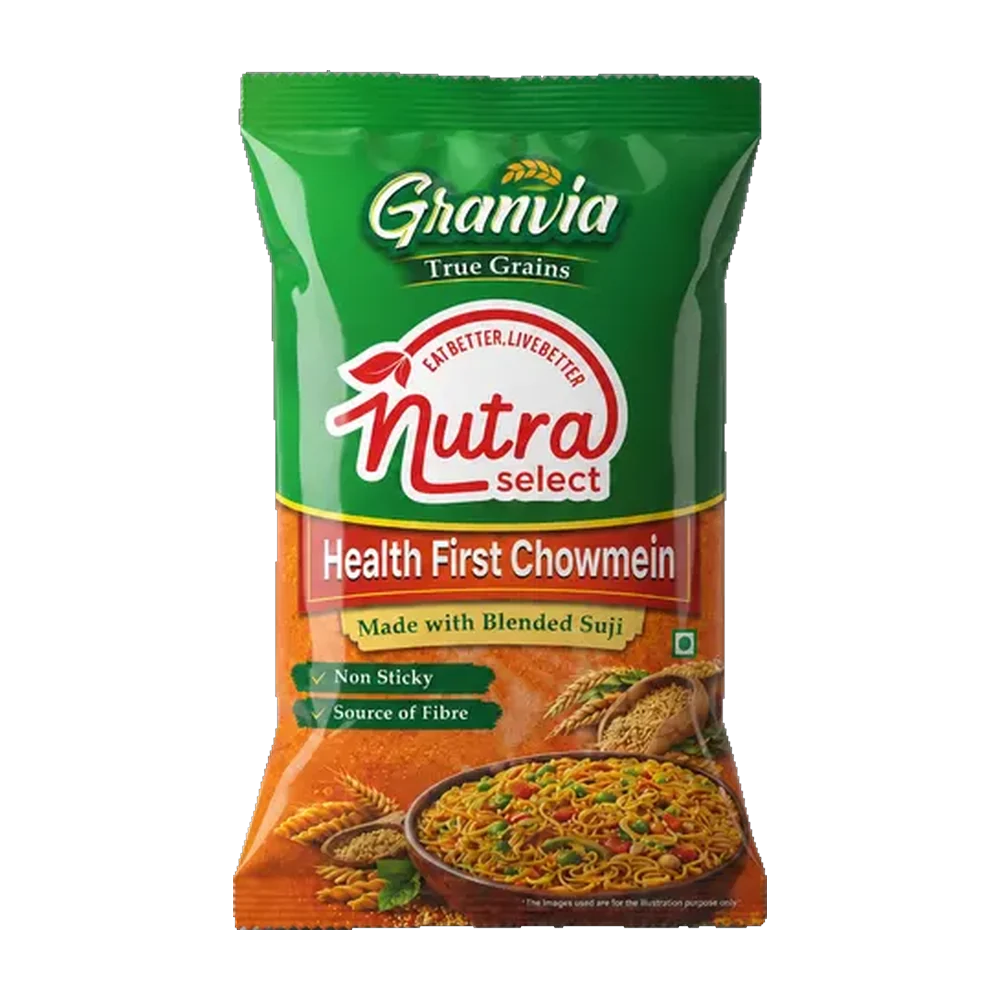
Granvia Health First Chowmein 250g pack pack: Made with Blended Suji
Nutra Select

Health First Chowmein

Blended suji chowmein

Blended with 30% suji for natural wheat protein and a firmer, more satisfying, non-sticky bite.

Pack sizes

  • Cake 100g
  • Cake 400g
  • Straight 250g
  • Straight 400/500g
  • Straight 800/900g

On the pack

  • Made with Blended Suji
  • Non Sticky
  • Source of Fibre
  • Contains Calcium

From the pack to the plate

How India Made Chowmien Its Own

Chowmien came to India with Calcutta’s Chinese community. But the Chowmien that eventually spread across the country was not simply a Chinese dish reproduced in India. It was created here—through an exchange between Chinese cooks, local ingredients and the tastes of Calcutta.

The city had been home to Chinese settlers since the eighteenth century. Over time, communities grew around Tiretta Bazaar and later Tangra. They brought with them their own food traditions, including the technique from which Chowmien takes its name: chow meaning stir-fried and mein meaning noodles.

The earlier Chinese restaurants of Calcutta served food that was generally lighter and more restrained than what would follow. As they began serving a wider Indian clientele, Chinese cooks adapted. Garlic, ginger and green chillies became more assertive. Sauces became darker, hotter and more plentiful. Vegetables, eggs, chicken and prawns were tossed with boiled noodles in combinations that were inexpensive, filling and endlessly adaptable.

Local enterprise played its part. By the 1950s, noodles were being made and sold in Calcutta, both loose and in packets. Chinese-owned businesses also began producing sauces specifically suited to the city’s palate—green chilli, chilli-garlic and hot-garlic sauces that had little precedent in China but would become inseparable from what Indians understood as Chinese food.

By the 1970s, Chowmien had crossed another boundary: from Chinese restaurants into Bengali homes. Cooks made their own versions with whatever was available. By the following decade, it had moved onto pavements, into college canteens and neighbourhood eateries. It acquired tomato sauce, sliced onions, cucumber and sometimes even mustard. Calcutta did not merely adopt Chowmien; it dismantled and rebuilt it in its own image.

From Calcutta, this new cuisine travelled to other Indian cities. Restaurants, cooks and street vendors carried with them a repertoire that included Hakka Chowmien, Chilli Chicken, Fried Rice and the different ‘Chinese’ sauces created in India. What the rest of the country received was therefore not Chinese food preserved unchanged, but a distinctive Indian Chinese cuisine born in Calcutta.

That makes Indian Chowmien an indigenous dish—not because its ancestry is entirely Indian, but because its familiar form was created here. Like many of India’s most enduring foods, it emerged from migration, exchange and improvisation before becoming part of everyday life.

Today, Chowmien belongs as naturally in a family kitchen or roadside stall as it does in a restaurant. Every cook can add something, leave something out and make a plate that is recognisably their own.

Calcutta began that process. The rest of India carried it forward.

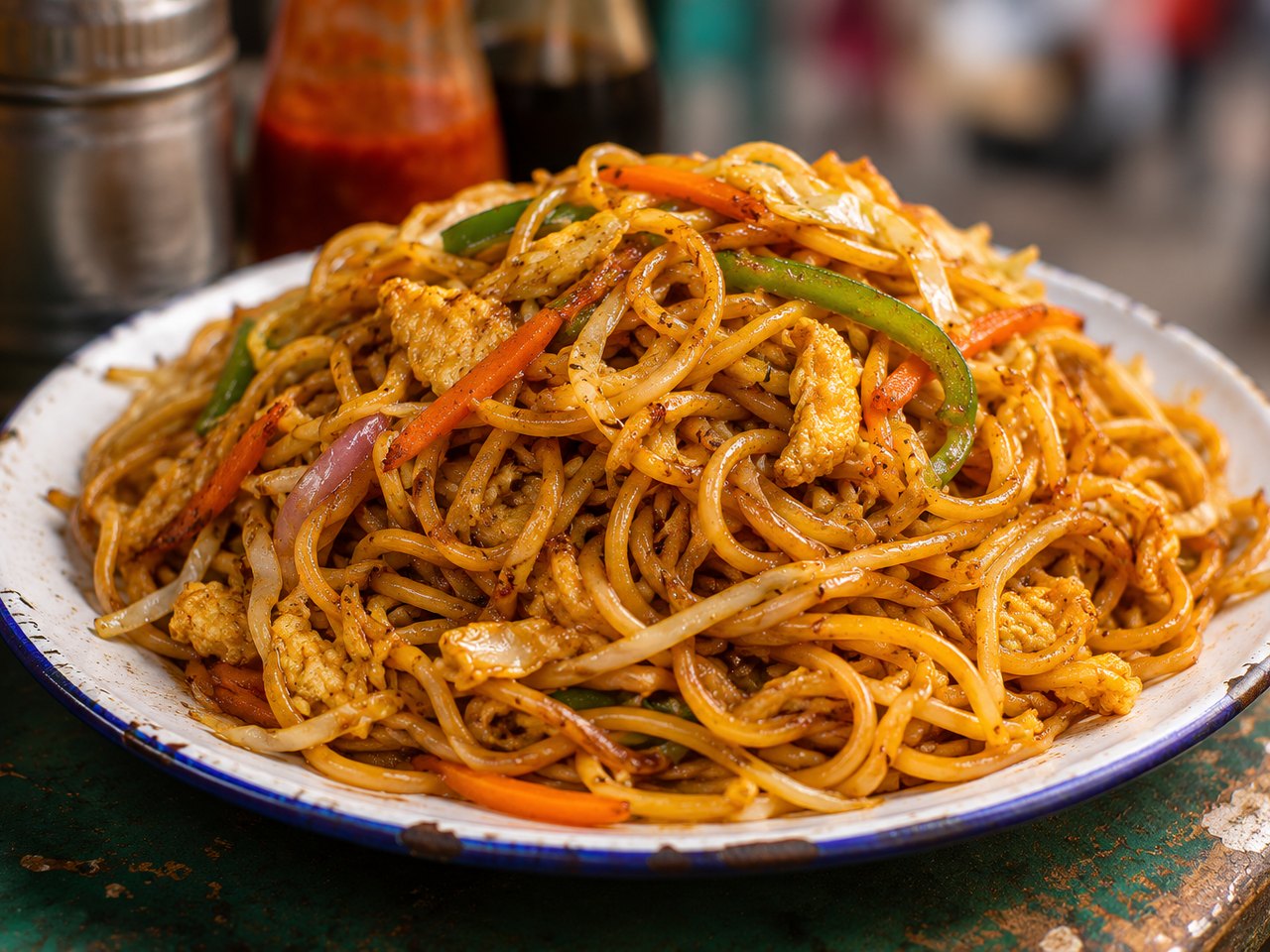
Calcutta Street Side Egg Chowmien

Hot, spicy and a little untidy—in the best possible way. This is the Chowmien served at neighbourhood stalls across Calcutta, finished with crunchy onion and cucumber and an unapologetic drizzle of sauce.

  • Serves: 2
  • Preparation time: 15 minutes
  • Cooking time: 10 minutes
Calcutta Street Side Egg Chowmien, serving suggestion
Serving suggestion

You will need

  • 150 g Granvia Chowmien
  • 2 eggs
  • 2 tbsp vegetable oil
  • 1 medium onion, thinly sliced
  • ½ cup cabbage, finely shredded
  • 1 small carrot, cut into thin strips
  • ½ capsicum, cut into thin strips
  • 3–4 cloves garlic, finely chopped
  • 2 green chillies, sliced
  • 1½ tsp soy sauce
  • 1 tsp green chilli sauce
  • ½ tsp red chilli sauce
  • 1½ tsp vinegar
  • ¼ tsp sugar
  • ¼ tsp black pepper
  • A small pinch of Bengali gorom moshla
  • Salt, as required
  • A pinch of MSG, optional

For the Calcutta-style finish

  • A few slices of raw onion
  • A few thin strips of cucumber
  • Tomato ketchup
  • Green chilli sauce

From pack to plate

  1. Prepare the Chowmien

    Cook the Granvia Chowmien according to the instructions on the pack, stopping while it is still firm and springy. Drain immediately, toss with a few drops of oil and spread it out so that the strands remain separate.

  2. Make the egg

    Beat the eggs with a pinch of salt. Heat a little oil in a wok or kadai, scramble the eggs until just set and transfer them to a plate.

  3. Keep the wok hot

    Place the wok over high heat. Add the remaining oil and half the sliced onion. Stir-fry for about a minute.

  4. Add the crunch

    Add the carrot and garlic, followed by the cabbage, capsicum and green chillies. Toss continuously over high heat for 1–2 minutes. The vegetables should remain bright and slightly crisp.

  5. Bring it together

    Add the cooked Granvia Chowmien, soy sauce, green chilli sauce, red chilli sauce, vinegar, sugar, pepper, gorom moshla and optional MSG. Add salt only after tasting, as the sauces already contain salt.

  6. Toss and serve

    Return the scrambled egg to the wok and toss everything together over high heat for another minute.

  7. Make it unmistakably Calcutta

    Serve immediately, topped with the remaining raw onion and cucumber. Finish with a generous zigzag of tomato ketchup and green chilli sauce.

The Street-Stall Secret

Cook over the highest heat your kitchen allows, and never crowd the wok. If making a larger quantity, cook it in batches. That quick, fierce heat keeps the vegetables crisp and gives the Chowmien its characteristic street-side flavour.
Find Granvia near you, or partner with us.