
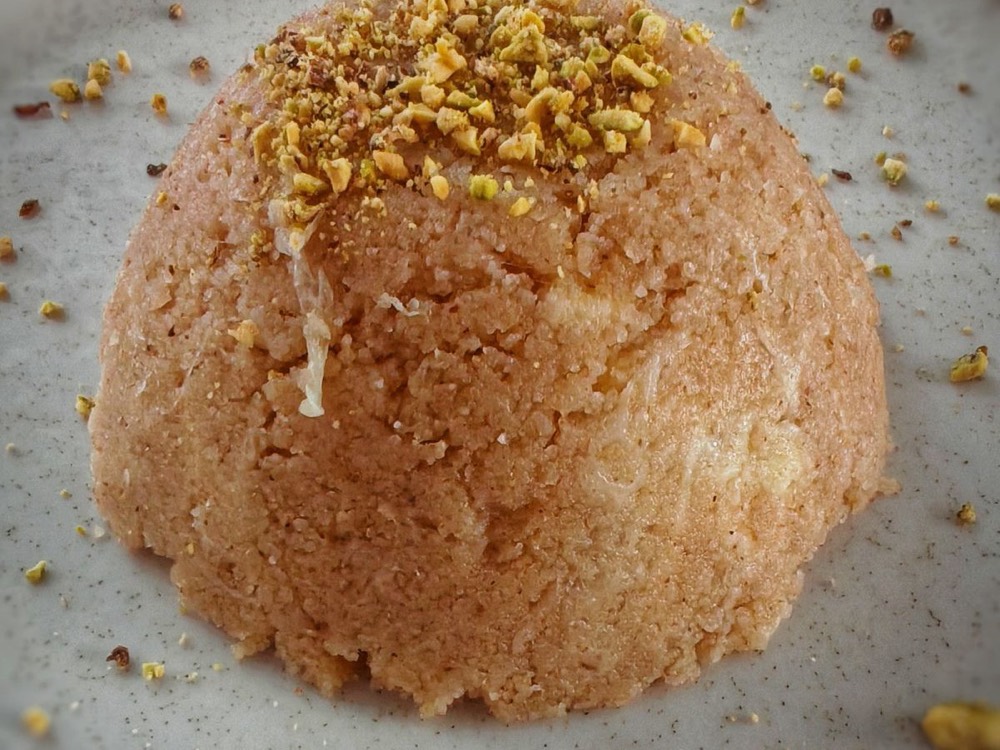
Few sweets are as quick or as widely loved as suji halwa. Across North India it is sooji ka halwa or sheera; in Bengal, cooked a little differently and offered during pujas, it becomes mohanbhog.
Both start with the same idea: semolina roasted slowly in ghee, then cooked with sweetened liquid until soft.
Ingredients (serves 4)
- 1/2 cup Granvia Semolina (Suji)
- 1/3 cup ghee
- 1/2 cup sugar
- 1 1/2 cups water or milk, or half and half
- 4 cardamom pods, crushed
- Cashews and raisins
Method
- Warm the water or milk with the sugar until the sugar dissolves. Keep it hot.
- Heat the ghee, fry the cashews and raisins and set them aside.
- Add the suji to the ghee and roast on low heat, stirring constantly, for 6 to 8 minutes until it smells nutty and turns light golden.
- Carefully pour in the hot liquid. It will splutter. Stir quickly to avoid lumps.
- Cook until the halwa thickens and leaves the sides of the pan. Add cardamom, nuts and raisins.
What makes mohanbhog different
Bengali mohanbhog is usually made with milk, roasted with a bay leaf in the ghee, and kept a little looser and creamier. It is a familiar part of Durga Puja and Lakshmi Puja bhog, and is often served beside luchi.
Granvia Semolina (Suji) is made from wheat, carefully milled and hygienically packed, and gives halwa its familiar soft, grainy texture.
Quick answers
- Why is my suji halwa lumpy?
- The liquid was added cold or too slowly. Keep it hot and stir continuously as you pour.
- What is the ratio of suji to water for halwa?
- About 1 part suji to 3 parts liquid gives a soft halwa. Use less liquid for a firmer one.
- Is mohanbhog the same as suji halwa?
- It is the Bengali version, usually made with milk and a bay leaf and offered as bhog during pujas.