
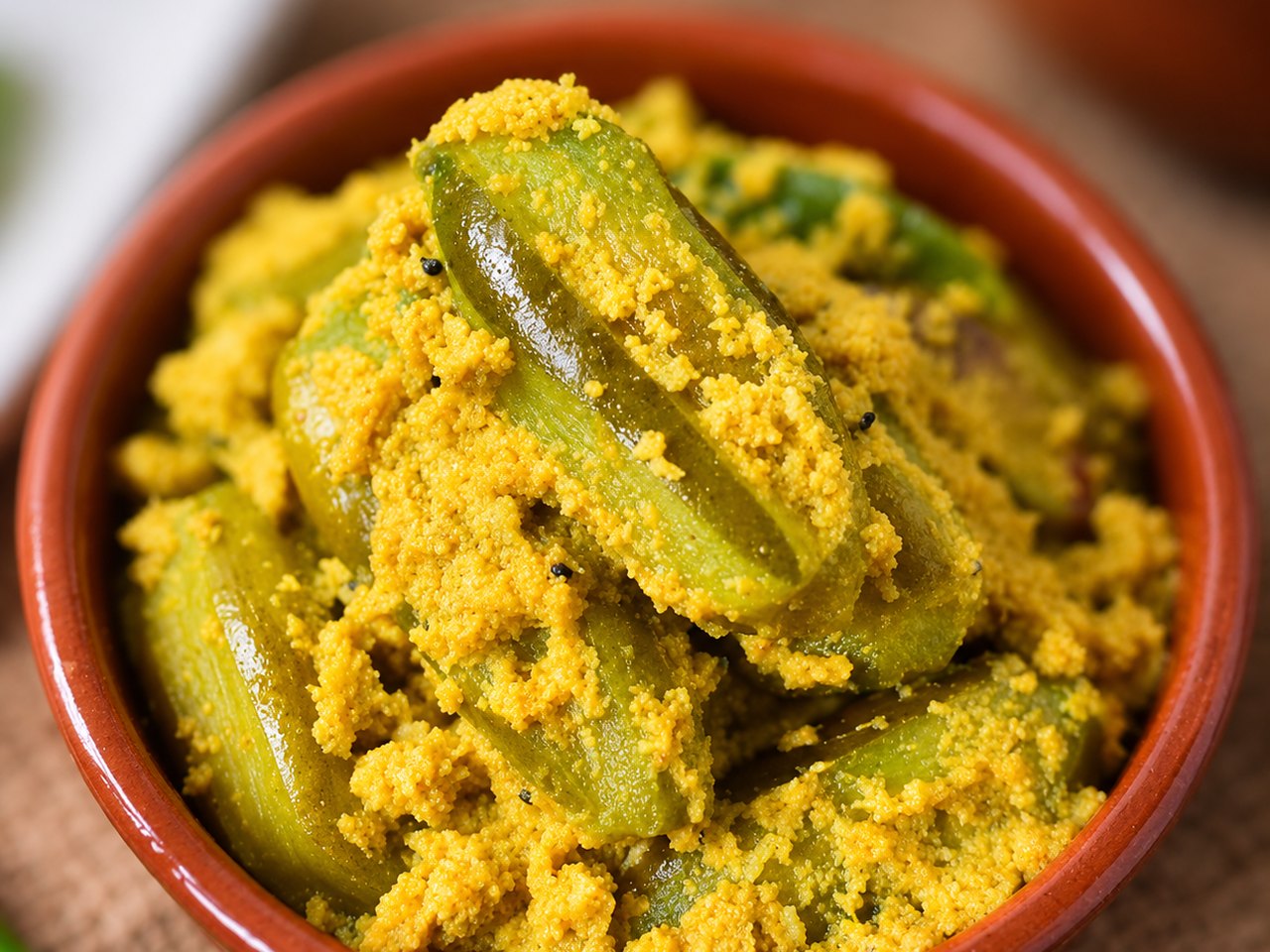
Posto is used so often in Bengali kitchens that cooks quickly notice when a batch is not right: the paste turns gritty, the taste is bitter or the seeds smell stale. A few checks help you spot this before cooking.
Look
- Good posto is creamy white to pale ivory and evenly coloured.
- Seeds should be small, round and similar in size.
- Look out for dust, tiny stones, husk or dark specks.
- There should be no clumps, webbing or insects, which suggest old or damp stock.
Smell and taste
Fresh poppy seeds have a mild, nutty smell. Because they are rich in oil, old seeds can turn rancid and smell sharp or like stale oil. Chew a few: they should taste mild and slightly sweet, not bitter.
The soak test
- Put a spoonful of posto in a glass of water and stir.
- Good seeds sink and the water stays fairly clear.
- Lots of floating husk, dust or cloudy water suggests the seeds need more cleaning.
- After 20 minutes the seeds should grind into a smooth, creamy paste.
Storage
Keep posto in an airtight jar in a cool, dry place, and buy a pack size you will finish in a few weeks. Granvia T4 Posto comes in 5g, 10g, 50g and 1kg packs for exactly this reason.
Quick answers
- How do I know if poppy seeds have gone bad?
- They smell sharp or like stale oil and taste bitter. Fresh posto smells mild and nutty.
- What colour should good posto be?
- Indian posto is usually creamy white to pale ivory, with an even colour and no dark specks.